
Farm Dam Enhancement Workshop: From water storage to climate solution
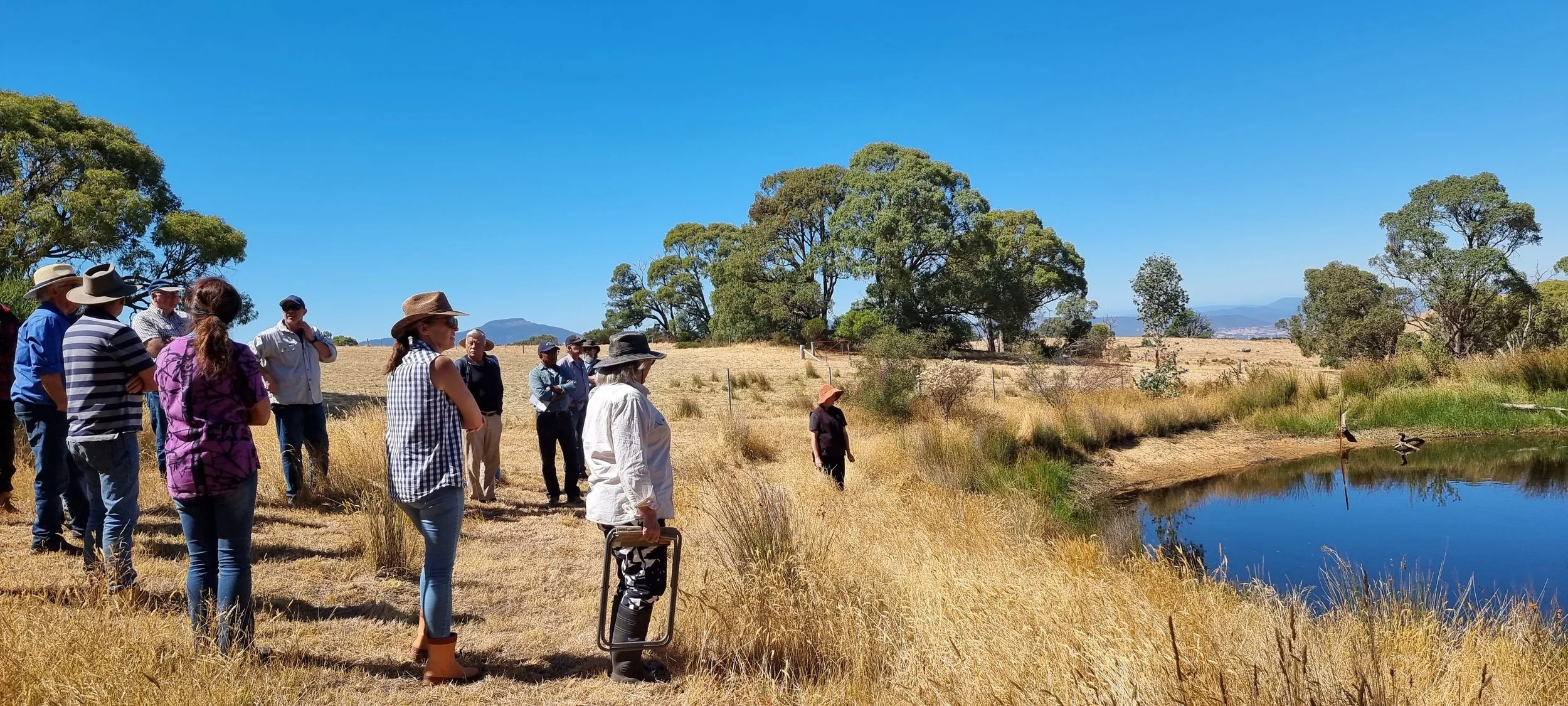
On Friday we were lucky to host a fascinating on-farm workshop with Martino Malerba from RMIT Teal Carbon. Participants were highly engaged and keen to understand the emerging science behind farm dams — not just as water infrastructure, but as powerful biodiversity habitats and potential climate solutions.
Why farm dams matter more than we think
Across Australia, farm dams collectively cover around 5,000 square kilometres — roughly the volume of 20 Sydney Harbours. That makes them one of the largest human-made freshwater ecosystems in the country.
Yet historically, dams have been managed purely for stock water and irrigation. Research is now showing they also play a major role in:
Carbon cycling
Nutrient runoff
Methane emissions
Freshwater biodiversity
This is especially important as we face a global freshwater biodiversity crisis — one of the fastest-declining ecosystem types worldwide.
(You can explore national dam data at: https://ausdams.org)
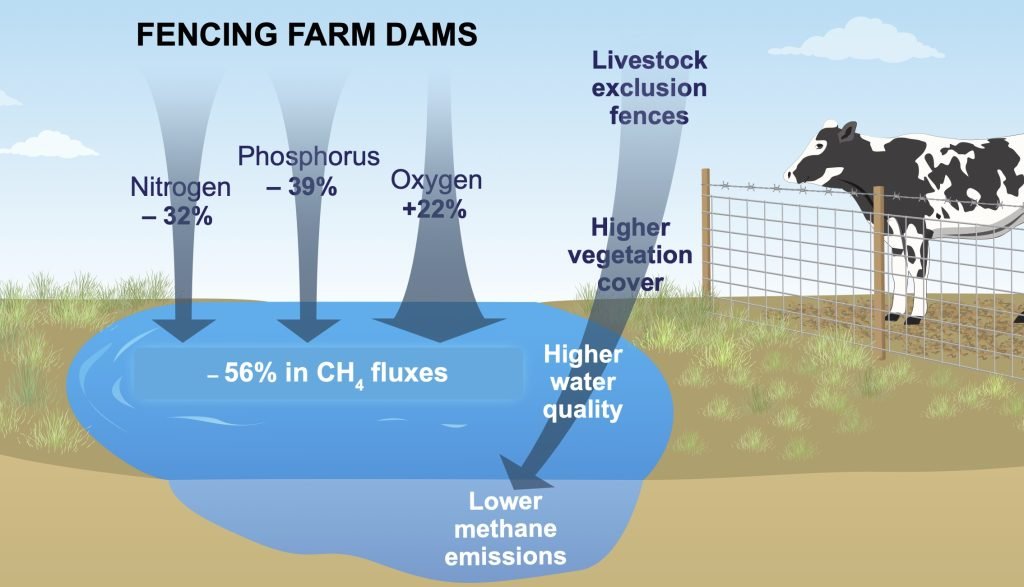
Image credit: www.bluecarbonlab.org
Turning a methane emitter into a carbon sink
A key concept discussed was how traditional dams often act like a chimney, releasing greenhouse gases — particularly methane — due to low oxygen levels and nutrient-rich sediments.
By contrast, an enhanced dam functions more like a vacuum, actively drawing carbon into the system.
Current research shows enhanced dams can achieve:
56% reduction in methane emissions
32% less nitrogen runoff
39% less phosphorus runoff
22% increase in dissolved oxygen
These improvements come from simple nature-based changes such as revegetated edges, shallow wetland zones, and improved water circulation. Rather than engineered infrastructure, the solution is ecological function.
Seeing the science in the landscape
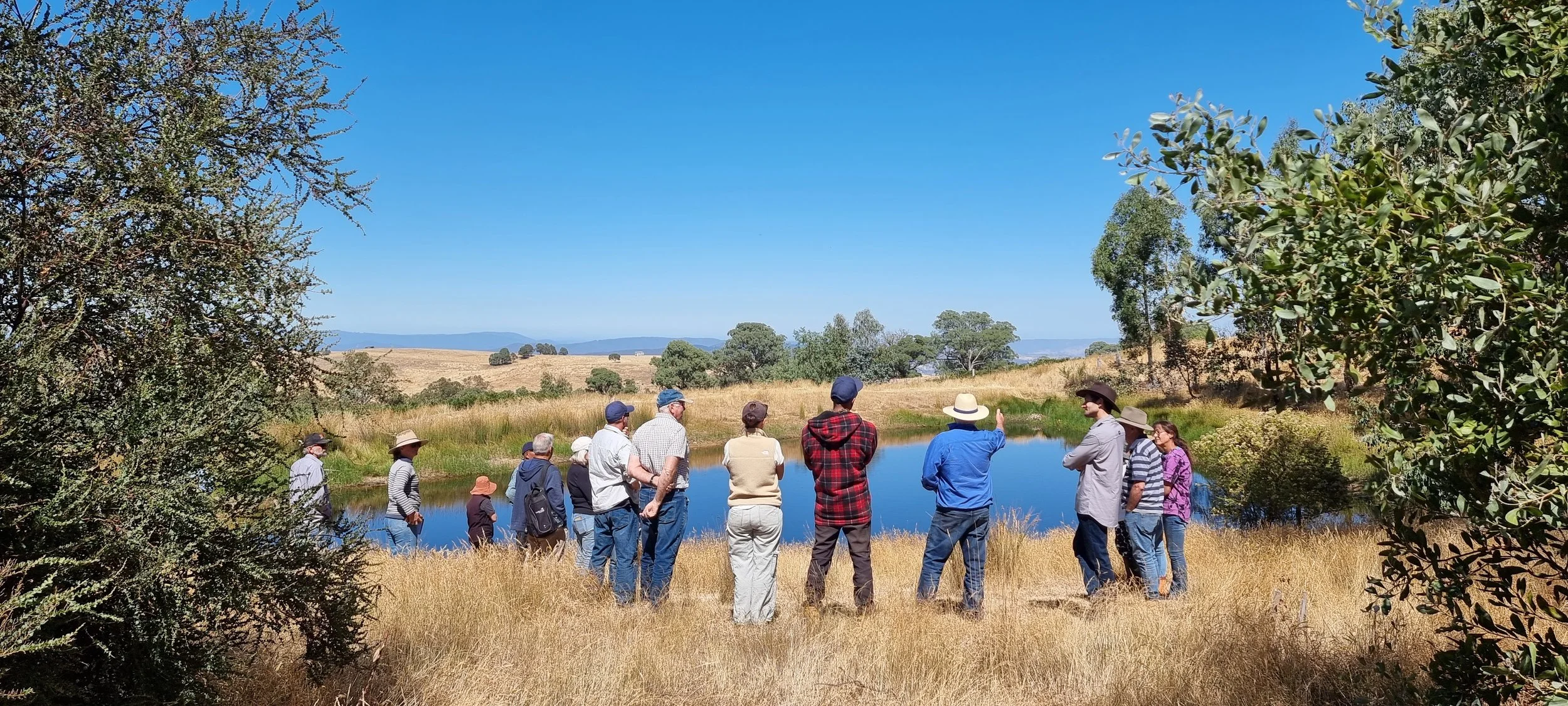
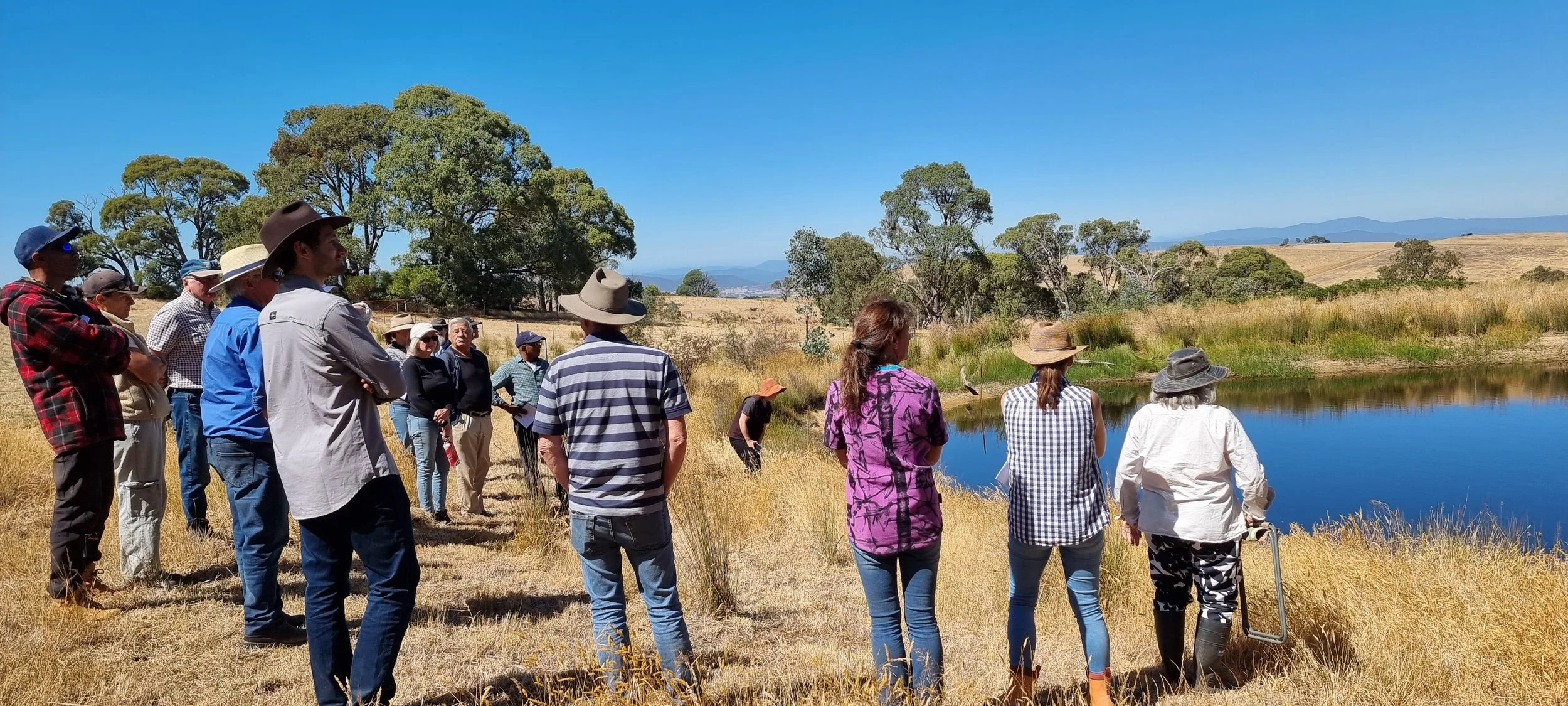
After the presentation, we headed out to inspect landholder Jeremy’s enhanced dams. Seeing the difference on the ground made the concepts click immediately — clearer water, vegetated edges, insect life, and bird activity all noticeably higher than in conventional dams.
Participants commented that it changed how they viewed dams entirely — from a maintenance burden to a farm asset delivering multiple benefits:
Stock water quality
Reduced algae
Habitat creation
Carbon outcomes
Landscape resilience
Learn more & plan your own dam enhancement
There are excellent practical guides available from ANU Sustainable Farms:
ANU Sustainable Farms Enhancing Farm Dams Booklet
ANU Sustainable Farms Guide to Revegetating Farm Dams
AgVic’s Managing Farm Water Guides and Calculators
If you would like help designing a dam enhancement plan, please contact Up2Us Landcare Alliance and check out our Property Planning Services Here
Farm dams are everywhere in agricultural landscapes — and that means they represent one of the biggest opportunities we have for improving biodiversity and reducing emissions at scale. Sometimes the climate solution isn’t new technology… it’s managing what we already have, differently.
Thank you and Acknowledgment
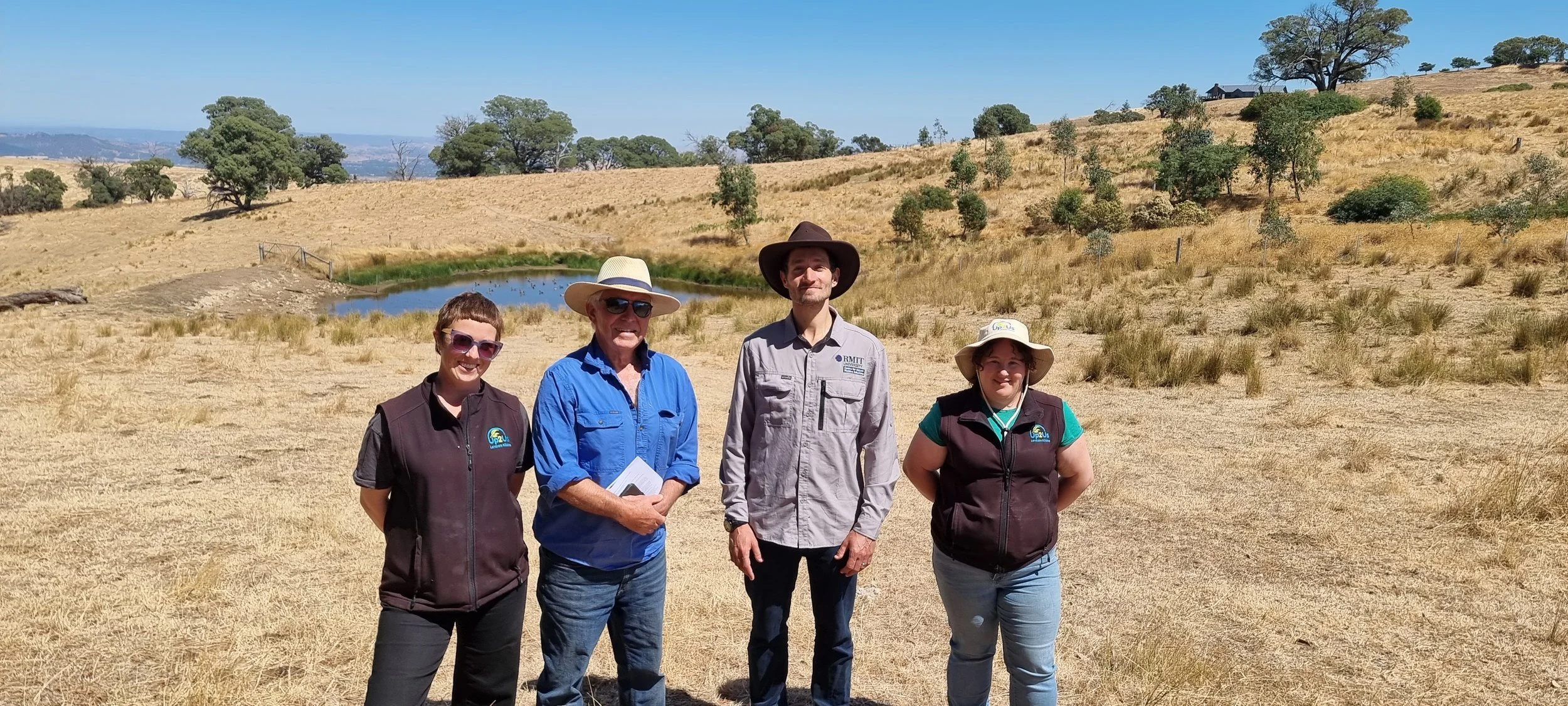
We would like to thank Martino Malerba for delivering such an engaging presentation and generously sharing his knowledge and insights into the science of farm dam enhancement.
A big thank you also to Jeremy, President of the Delatite Landcare Group, for kindly hosting the workshop and welcoming participants onto the property to see enhanced dams in action.
Funding acknowledgement
This project of the Regional Drought Resilience Planning program received funding from the Australian Government’s Future Drought Fund and the Victorian Government.
