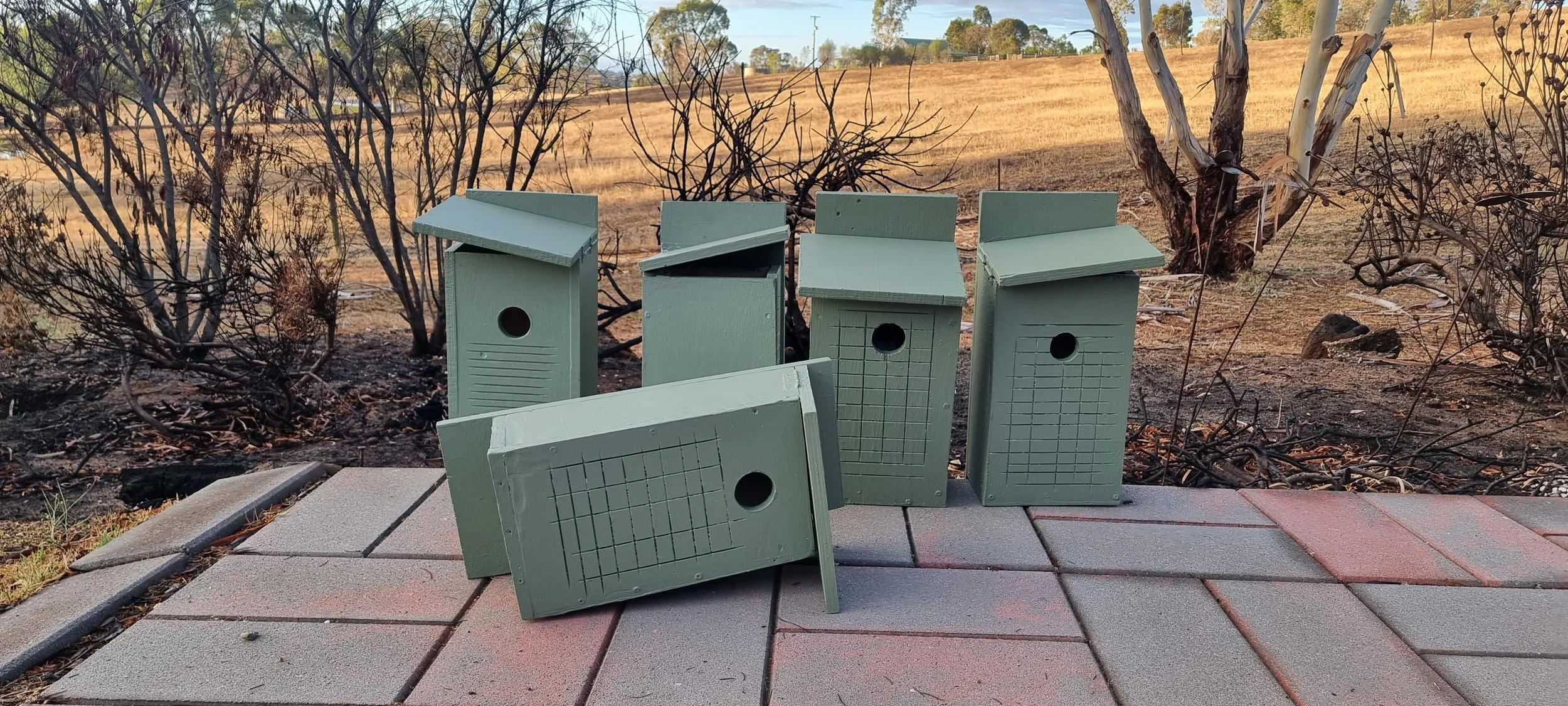
Nest Boxes for Fire-Affected Wildlife: A Community Collaboration
We are excited to share that a collection of finished nest boxes—built last year by students from Mansfield Secondary College—have now been donated to The Upper Goulburn Landcare Network. These boxes will be installed in fire-affected areas to help restore much-needed habitat for local wildlife.
Following the devastating bushfires in our region, an estimated 90% of hollow-bearing trees were lost. Tree hollows are critical habitat for many native animals, providing shelter, breeding sites, and protection from predators and weather. With so many natural hollows destroyed, artificial habitat such as nest boxes plays an increasingly important role in supporting wildlife recovery.
These nest boxes will provide safe homes for species including:
Sugar gliders
Parrots
Possums
Microbats
and a variety of other native birds and mammals
By offering alternative shelter, we can help wildlife survive and thrive while our forests regenerate over time. Nest boxes are not a replacement for old-growth habitat, but they are a practical and immediate way to bridge the gap in areas where hollows are scarce.
This project also highlights the power of community collaboration and hands-on learning. The students who built the boxes gained valuable skills in design and environmental stewardship, while contributing directly to local conservation efforts. Their work demonstrates how education and environmental action can go hand in hand.
Once installed, these boxes will become quiet but important refuges—tiny sanctuaries that help rebuild ecological connections in landscapes still healing from fire. Every box represents hope and a step toward ecological recovery.
We extend our sincere thanks to the students and teachers at Mansfield Secondary College for their effort and creativity, and to Upper Goulburn Landcare Network for coordinating the installation and ongoing monitoring of the boxes.
Together, we are creating habitat, supporting wildlife, and fostering a stronger connection between community and environment—one nest box at a time.