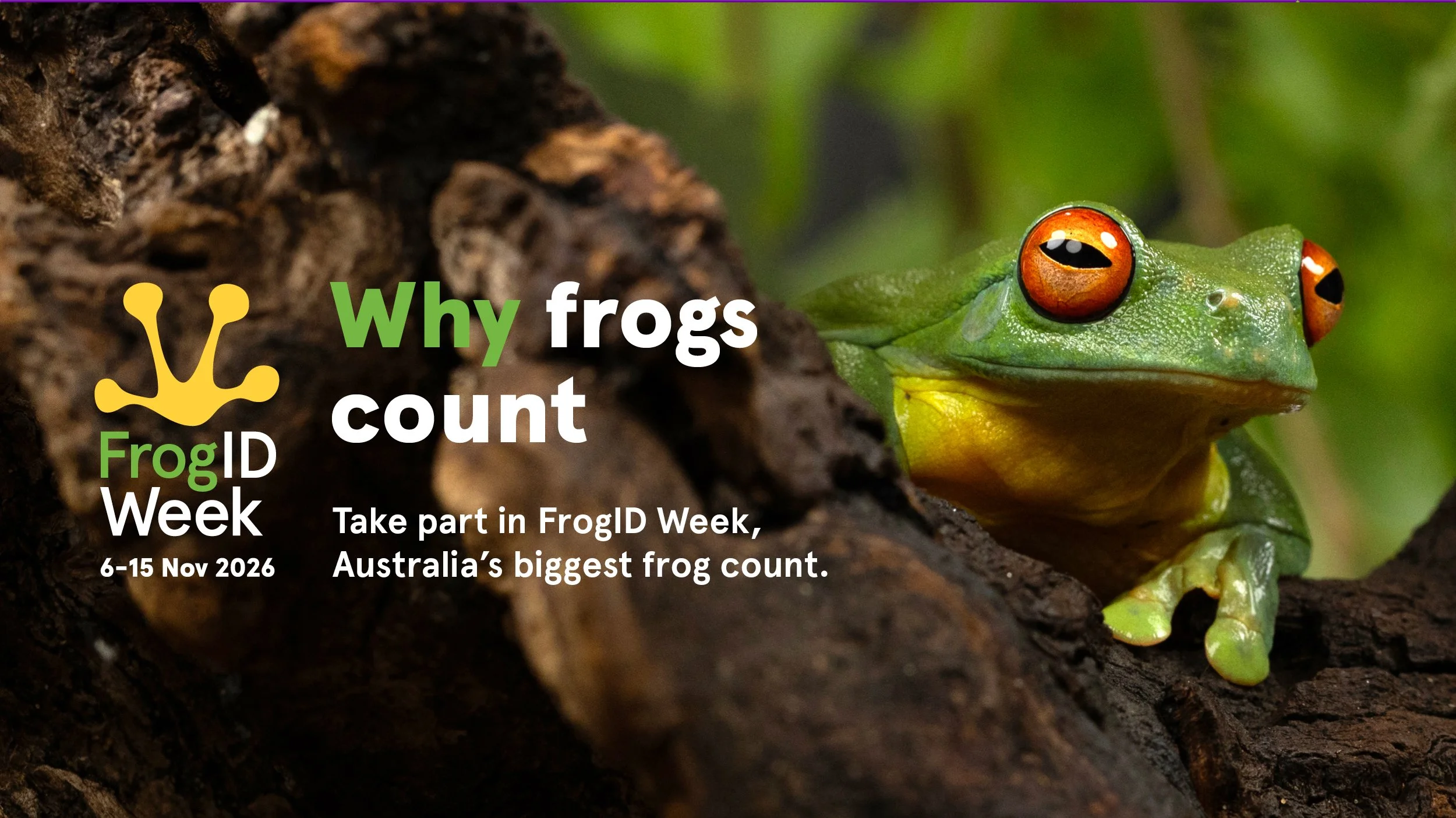
FrogID Week 2026
Your backyard could help save Australia's frogs this FrogID Week
From 6 to 15 November, the Australian Museum is asking Australians to step outside after dark, listen for frogs and record what they hear. It's called FrogID Week, and you don't need a science degree, special gear or a trip into the bush to take part. All you need is a smartphone and a few spare minutes.
At up2us, we love anything that gets our community outdoors and doing something good for the local environment, so we're backing FrogID Week all the way. Here's why it matters, how you can help, and what we've got planned.
Why your backyard matters
One in five Australian frog species is threatened with extinction. To protect them, scientists first need to know where they're still hanging on, and new Australian Museum research suggests a lot of the answers are in our own neighbourhoods.
The study looked at almost 500,000 FrogID records from NSW and found that 86 per cent came from private land. Of the 24 threatened frog species examined, 20 had been recorded on privately owned properties. In other words, the frogs calling from your garden pond, drainage ditch or paddock dam could be telling scientists something really important.
And it isn't only rare frogs that count. As FrogID Lead Scientist Dr Jodi Rowley explains, "We want people to record any frogs they hear." Even common species are valuable, especially when people record from the same spot over time, because that shows how frog populations are changing.
How to get involved
Taking part is easy. Download the free FrogID app, head outside (dusk and after rain are usually best), and record any frog calls you hear. Each recording is checked by Australian Museum experts and goes straight into national research and conservation work.
FrogID is now in its ninth year and has collected more than 1.5 million frog records. Last year's FrogID Week set a record of its own, with 118 species and more than 26,700 verified records over just 10 days. Even so, recordings only cover about 44 per cent of Australia, so every new contribution helps fill the gaps, particularly in rural and remote areas.
This year scientists are especially keen to hear 20 priority species, including threatened and rarely recorded frogs such as the Green and Golden Bell Frog, the Southern Bell Frog and the Giant Burrowing Frog. You'll find the full list for each state, plus the app itself, at frogid.net.au.
Frogs to listen for around Mansfield
You don't have to go far to hear frogs in our part of the world. Here are a few locals worth listening for:
Pobblebonk (Eastern Banjo Frog): probably Mansfield's best-known frog. Listen for its single, plucky "bonk" after good rain, and look for the pale yellow stripe from its eye to its arm. Pobblebonks love a well-kept vegie patch, so you may have dug one up without realising.
Spotted Marsh Frog: another regular in local gardens, often found under leaf litter and garden debris. It comes out at night to feed on small insects, and its call is a quick "tok" or "click".
Victorian Frog (Plains Brown Tree Frog): a small brown tree frog recorded right here in Mansfield. It's easy to mistake for its close cousins, so it's a great one to let the app and the experts sort out.
The Mansfield Shire is also home to some much rarer frogs. Threatened species recorded in the shire include the critically endangered Spotted Tree Frog, the Alpine Tree Frog, the Growling Grass Frog and the Brown Toadlet (SWIFFT threatened fauna list). Spotted Tree Frogs live in cool, rocky mountain streams, and a recovery project is under way not far from us near Lake Eildon. Most of us won't hear these on an evening stroll, but every recording from our region helps scientists build a clearer picture of what's out there.
Not sure where to start? Any spot with water nearby is worth a listen after dark, whether that's your garden, a farm dam, a roadside drain or the Mullum Wetlands on High Street. Spring and early summer rain is when local frogs really get going, so FrogID Week is perfect timing.
Join us on 13 November (wait list now open)
We're celebrating FrogID Week with our own frog event on Friday 13 November. Thank you so much for the response. The event is now fully booked!
If you missed out, please don't let that stop you. Spots sometimes open up closer to the day, so add your name to the wait list and we'll get in touch if a place becomes available.
In the meantime, you can still be part of FrogID Week from your own backyard. Grab the app and start listening.
Need a hand with the app? If you'd like help installing or using FrogID, pop into the Up2Us office and we'll happily get you set up.
Every recording counts
Frogs are an early warning sign for the health of our waterways and bushland, and right now they need us listening. So this FrogID Week, step outside, tune in and hit record. You might be surprised by who's been calling from your backyard all along.
We'd love to hear how you go. If you take part, let us know what you recorded and where. Tell us in the comments, tag us on social media or mention it next time you're in the office. Whether it's your first Pobblebonk or something rarer, we want to celebrate it with you.
FrogID is led by the Australian Museum. Research findings and figures in this post come from the Australian Museum's FrogID Week 2026 media release. Follow along at @FrogIDAus and @australianmuseum, and find out more at frogid.net.au.