Time to take action on European Wasps
As the weather warms up across North East Victoria, European wasps become increasingly active.
European wasps are highly adaptable and can establish large colonies, often building nests underground, in wall cavities, sheds and other sheltered locations. Their numbers increase through spring and summer, with colonies becoming particularly active around late summer and autumn.
These wasps are opportunistic feeders and can compete with native insects for food. They are also attracted to sweet foods, fruit and meat, which can bring them into close contact with people around homes, gardens, parks and picnic areas.
Unlike many native wasps, European wasps can sting repeatedly when defending their nest, making established colonies a potential safety concern.
How to take action and reduce wasp numbers
Autumn and early spring are the most important times to take action. These are the periods when queen wasps are searching for food or beginning to establish new nests. Trapping queens now can prevent thousands of worker wasps later in the season.
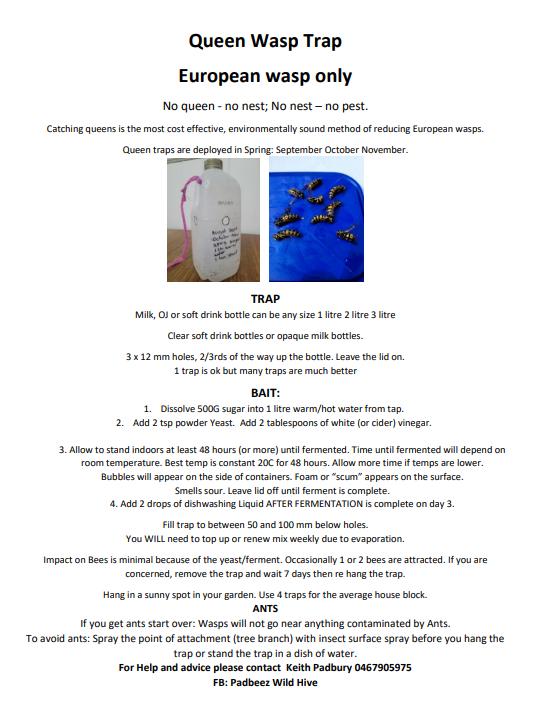
The good news is that it’s easy to make a difference. The Mansfield Shire Council has created an excellent fact sheet outlining how to build and place effective wasp traps using simple, natural ingredients. Setting traps in your garden, paddock, or around local parks can make a big impact in reducing wasp numbers before summer.
Set traps early in the season (autumn and spring).
Avoid leaving food or drink uncovered outdoors.
Report any large or active nests to your local council.
Share information with neighbours and friends — community-wide action is key.
See below for an information on how to create your own wasp traps.