Meet the White-footed Slime Mould
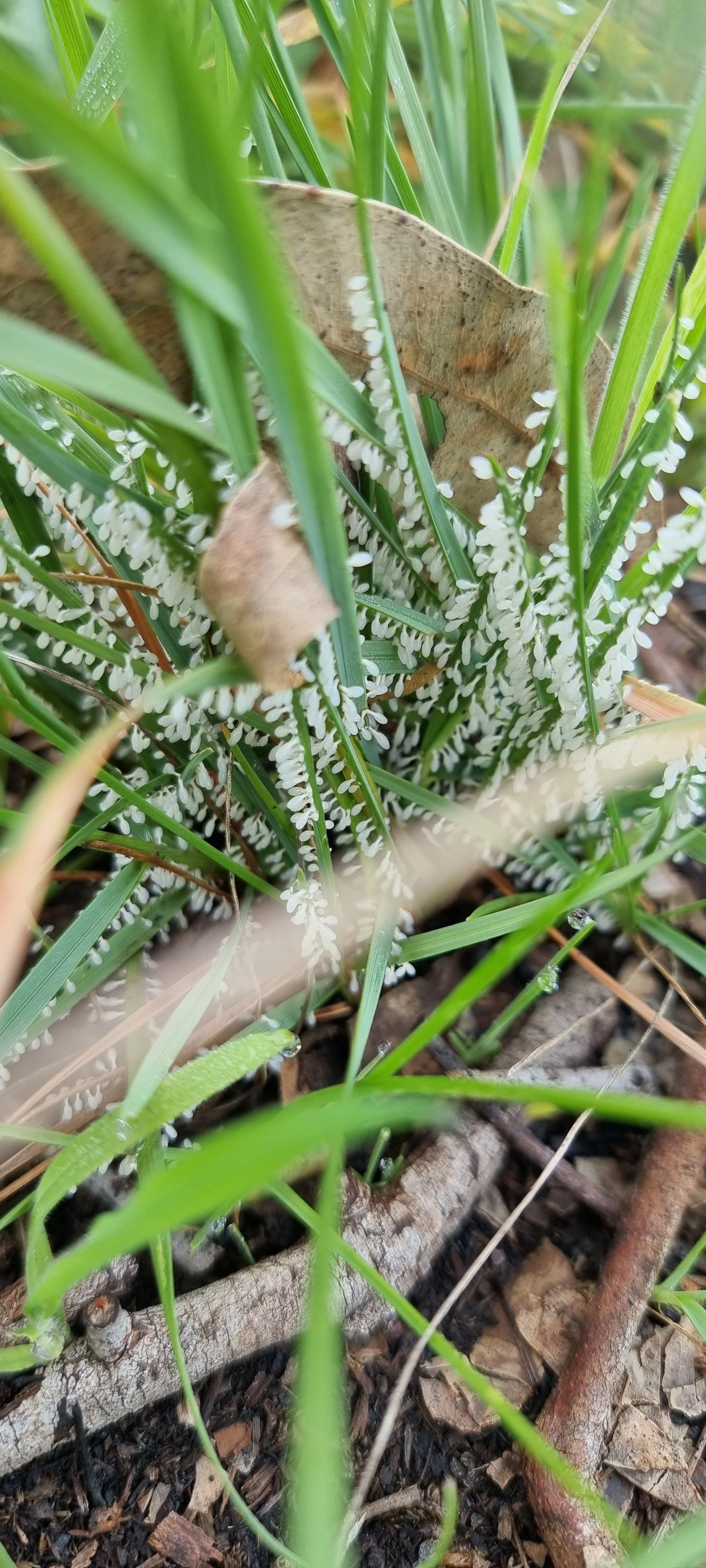
Up2Us project officer Jess was walking a paddock that was burnt in the Longwood fires in January when she spotted something that made her stop and crouch down for a closer look: a tiny, ghostly white structure just a few millimetres tall. It turned out to be Diachea leucopodia — the White-footed Slime Mould — identified via iNaturalist.
Slime moulds are genuinely extraordinary. They're not fungi, not plants, and not animals — they belong to a kingdom all their own, spending most of their lives as invisible single-celled amoebae in the soil. When conditions are right, those cells merge and push up into the fruiting bodies we can actually see. That brief emergence is what Jess caught on camera.
This particular species gets its name from its white stalk, which supports a sporangium — a spore capsule — that starts white and matures to yellow or orange. What Jess found is still in its early stages, so it's worth watching.
Finding it in fire country is quietly meaningful. After a fire, microscopic organisms like slime moulds are among the very first responders — moving into charred organic matter, breaking it down, cycling nutrients back into the soil, and setting the stage for everything that follows. Life doesn't wait for permission to come back.
If you're out in the fire-affected country and notice something unusual, log it on iNaturalist. Every observation contributes to our understanding of how these landscapes recover.