
Fire, Flowers and the Wait to See What Comes Back
There's a bit of a catch at the heart of a recent ABC Science article by Peter de Kruijff: fire is both the thing that saves some of our wildflowers and the thing that can wipe them out. It all comes down to timing, and climate change is messing with the clock.
The red beak orchid, whose Latin name literally translates to "fire orchid." It only flowers after a blaze, using the opportunity to send seed out on the wind. Go without fire for decades, though, and instead of flowering it just quietly clones itself underground, sometimes spreading into colonies that could be thousands of years old. Burn it too often, and that slow-built colony gets cut down before it can recover. It's not that the orchid needs fire or fears it — it needs the right amount, at the right interval.
The same trade-off plays out across dozens of other species. Pink flannel flowers, which only germinate in response to smoke, are "fire ephemerals" — quick to bloom, quick to set seed, then happy to disappear again for decades until the next burn. Christmas bells are similar but slower, taking around three years to go from seed to flower, which means anything shorter than that between fires starts working against them rather than for them. Then there are the plants with no plan B at all: obligate seeders like alpine ash and several banksia species, which can only come back from seed. If a fire hits before those plants have matured and produced a fresh seed bank, there's nothing left to regenerate from.
Australian flora didn't evolve alongside fire in general — it evolved alongside particular fire regimes, with fairly predictable gaps between burns. As those fires become more frequent, more intense and more likely to burn through entire landscapes in a single event, some of those old survival strategies stop being enough.
Back in January this year, the Longwood fire tore through more than 130,000 hectares of north-east Victoria, starting near the Hume Highway and eventually threatening townships like Ruffy, Yarck, Molesworth and Alexandra before it was brought under control weeks later. A little further north, the Goomalibee–Tarnook Road fire burnt through around 1,600 hectares of similar grazing and box-ironbark country. Both fires tore through a landscape that's a patchwork of grassy woodland, pastoral land and remnant bush — not unlike the kind of country where species like Christmas bells, orchids and various obligate seeders make their home.
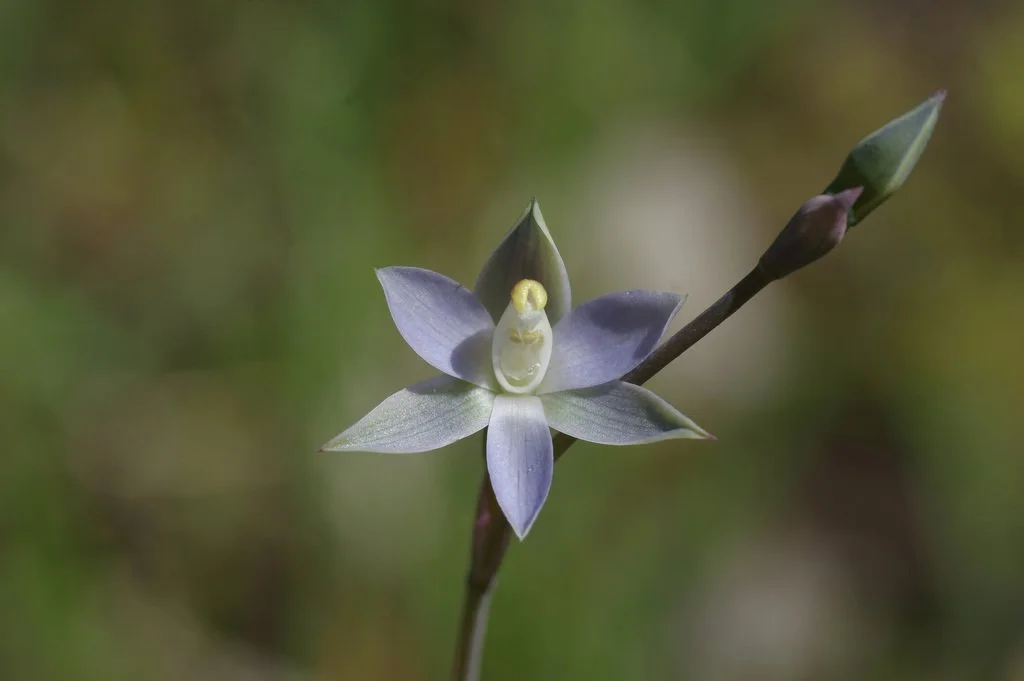
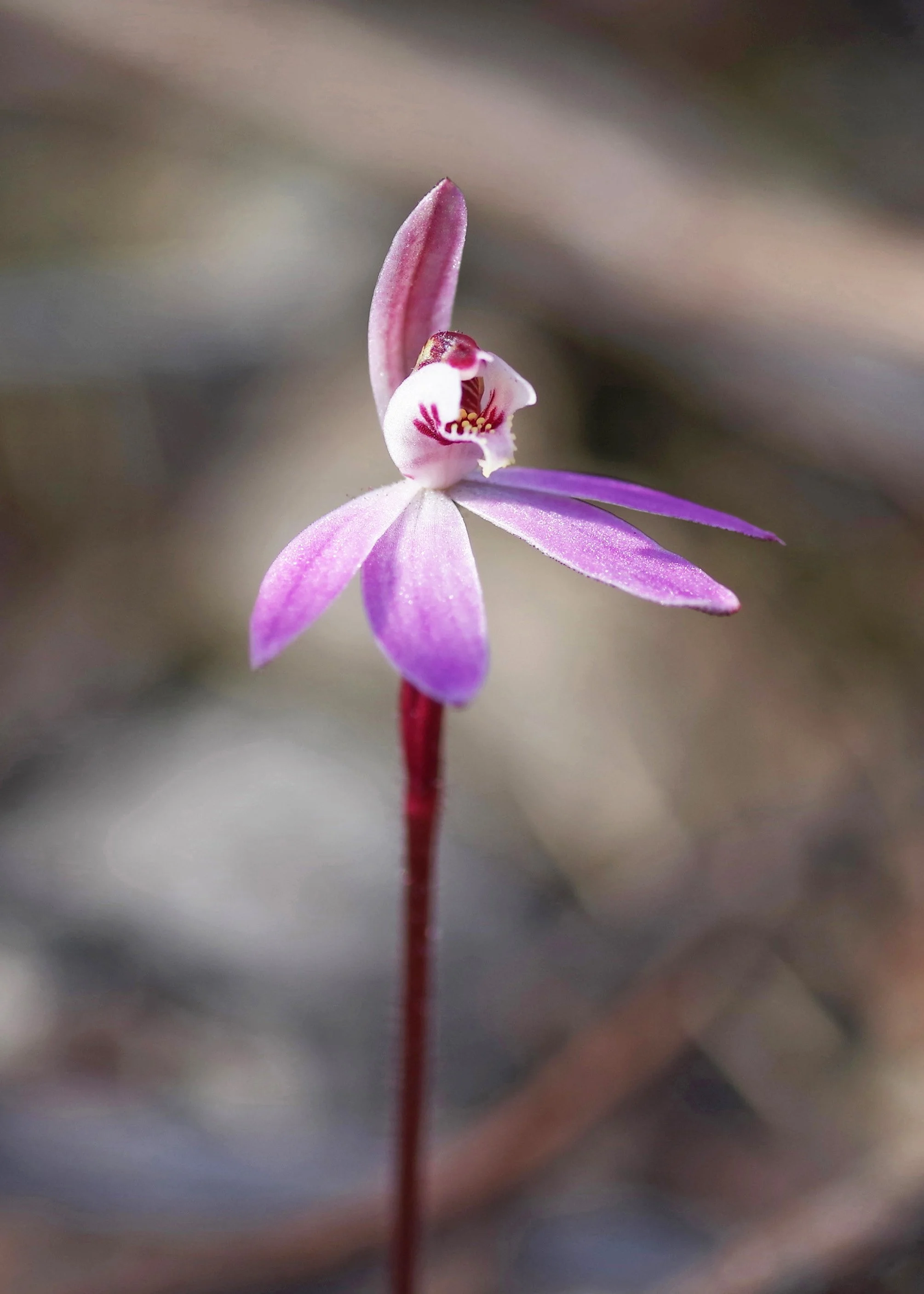
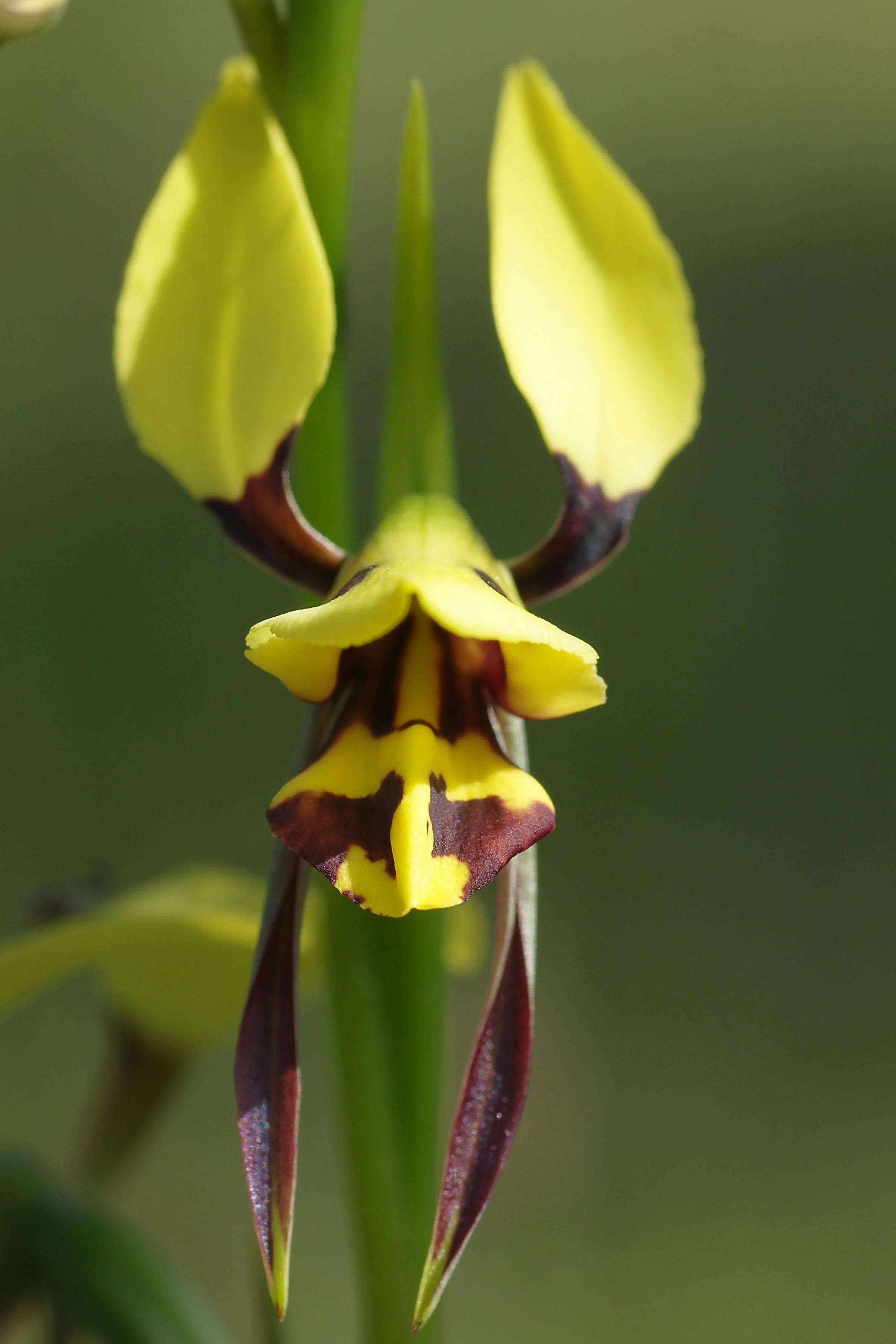
Victoria has a good track record of orchids putting on a show after fire, documented in detail after the Black Saturday fires back in 2009. Spider orchids (various Caladenia species), donkey orchids (Diuris), leek orchids (Prasophyllum) and sun orchids (Thelymitra) all flowered in far greater numbers than usual in the burnt ground that followed, some forming dense colourful patches where before there'd only been the odd scattered plant. A handful of species go further still and barely flower at all without fire. The undertaker orchid (Pyrorchis nigricans, so called because its flowers turn black with age) and the rabbit orchid (Leptoceras menziesii) can sit as leafy, non-flowering colonies for years, then flower en masse the very first spring after a burn.
Read the full article on the ABC: Fire is a friend and foe for Australian wildflowers
Photo credit: Geoff Boyes