
Bogongs Stop for a Feed at Goughs Bay
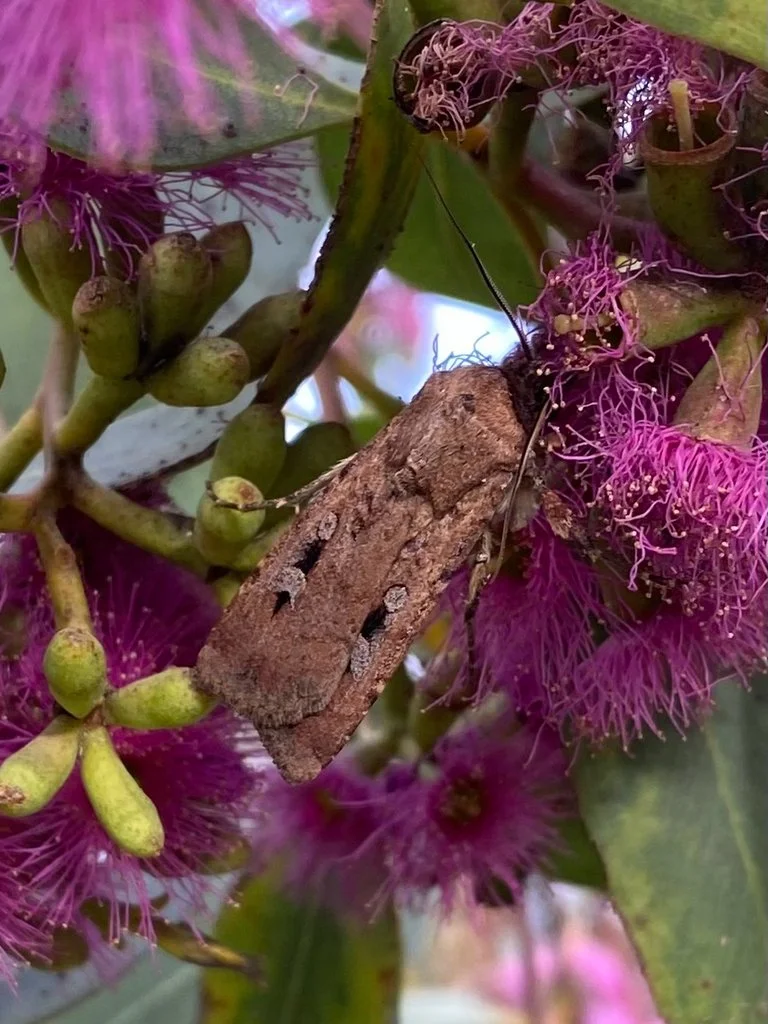
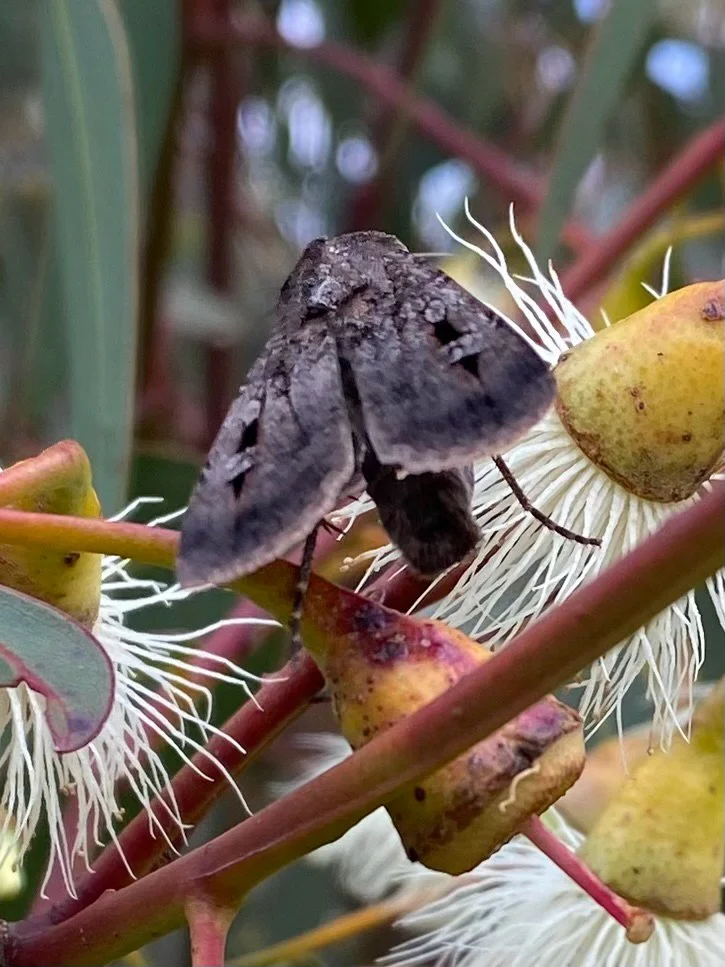
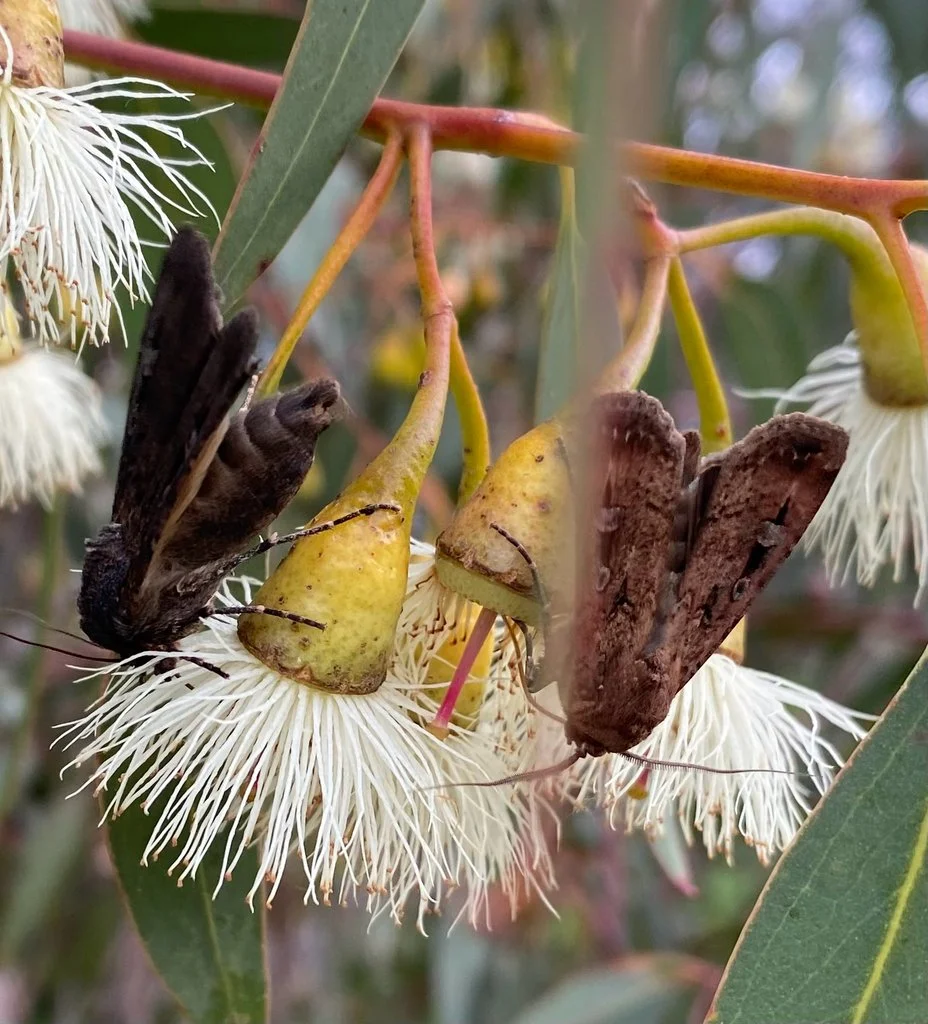
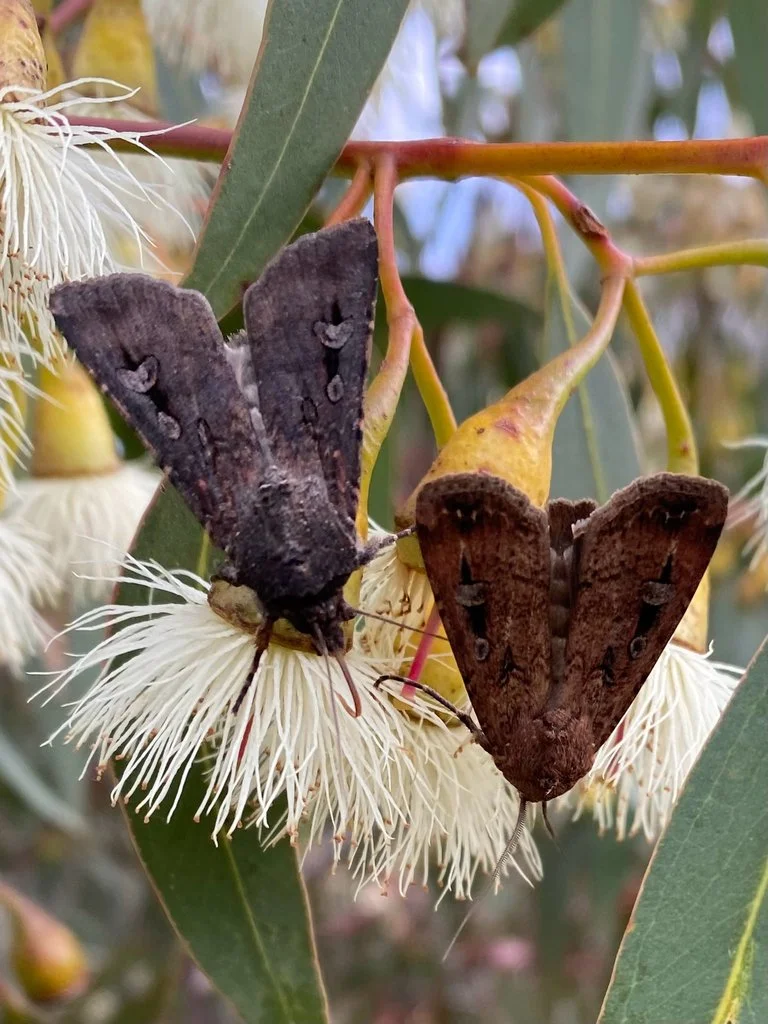
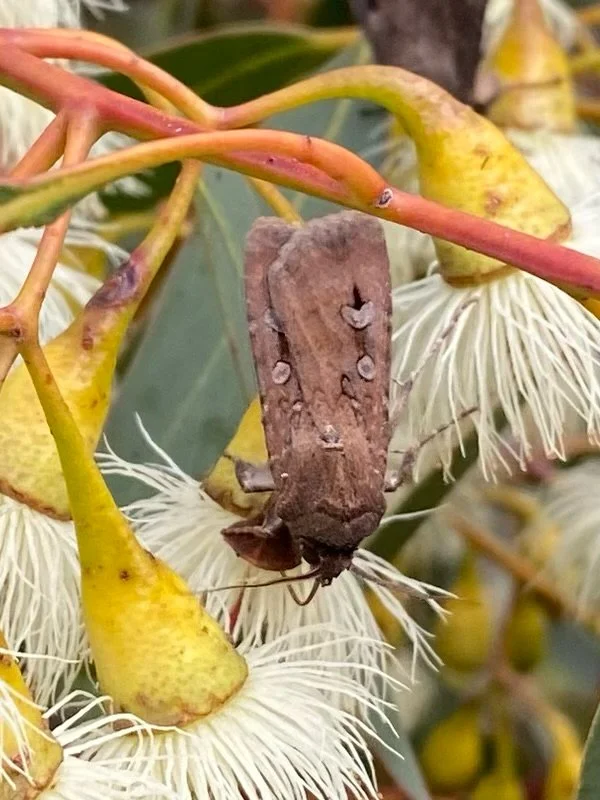
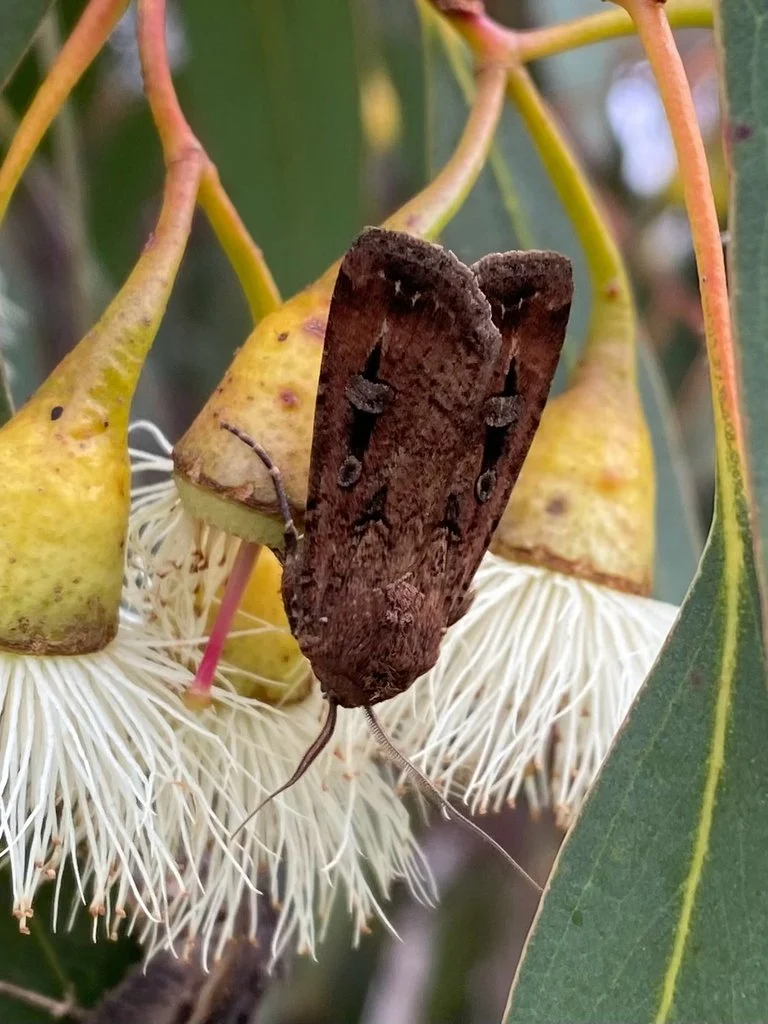
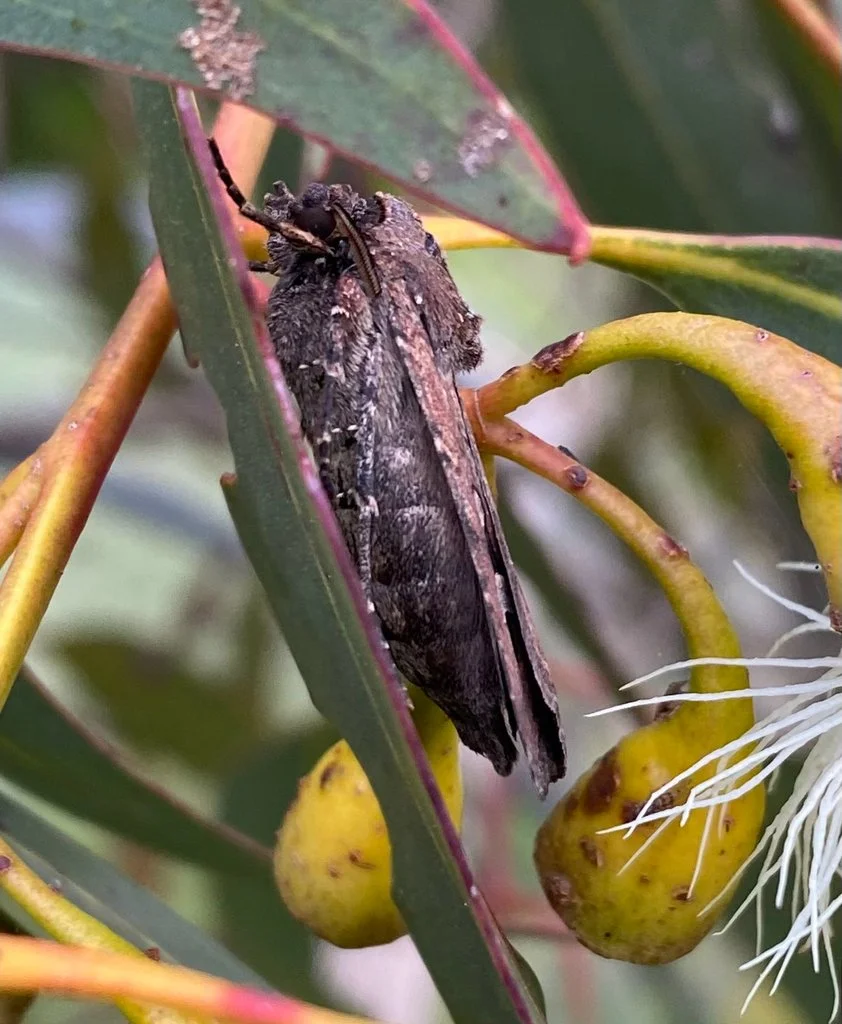
Local resident Leanne Robson recently found hundreds of bogong moths in the flowering eucalypts at Goughs Bay, feeding on nectar before continuing their migration. Her photos show the moths' brown and charcoal wings, with their dark kidney-shaped markings, against the creamy blossoms.
The journey
Bogong moths breed in southern Queensland, northern NSW, western Victoria and parts of South Australia. Each spring they migrate more than 1,000 kilometres to the cool caves and rock crevices of the Victorian Alps, where they spend summer in a kind of hibernation. They navigate partly by the stars, and their exact route to the High Country is still largely unknown. Flowering trees along the way give them a place to refuel.
Good news for a threatened species
Bogong moths were listed as endangered in 2021, after populations crashed around 2017 to 2019. Zoos Victoria conservation biologist Dr Marissa Parrott says this is the best year in nearly a decade and hopes it marks the start of a recovery.
University of Sydney entomologist Dr Caitlyn Forster says these numbers are in theory normal for this time of year, but we haven't seen them for a long time. She calls this "shifting baseline syndrome", where each generation accepts a depleted natural world as normal.
How you can help
Share your sightings. Upload photos to iNaturalist to help researchers track the moths' journey and numbers. You can also report to the Bogong Watch tracker, and look out for moths marked with a small blue paint dot.
Switch off unnecessary lights. Artificial light can draw the moths off course.
Help moths that come inside. Gently guide them back outside, or scoop them up with a jar and funnel.
Thank you to Leanne Robson for sharing her photos.
Photos: Leanne Robson. Background information from ABC News, "Bogong moths have arrived in Sydney, Canberra and coastal NSW. When will they go?" (7 October 2026).