
Soil Health
Soil is a core asset in any farming system, directly influencing productivity, input efficiency, and long-term sustainability. Its condition, referred to as soil health, affects how well land performs under variable conditions, particularly during drought.
What is soil health?
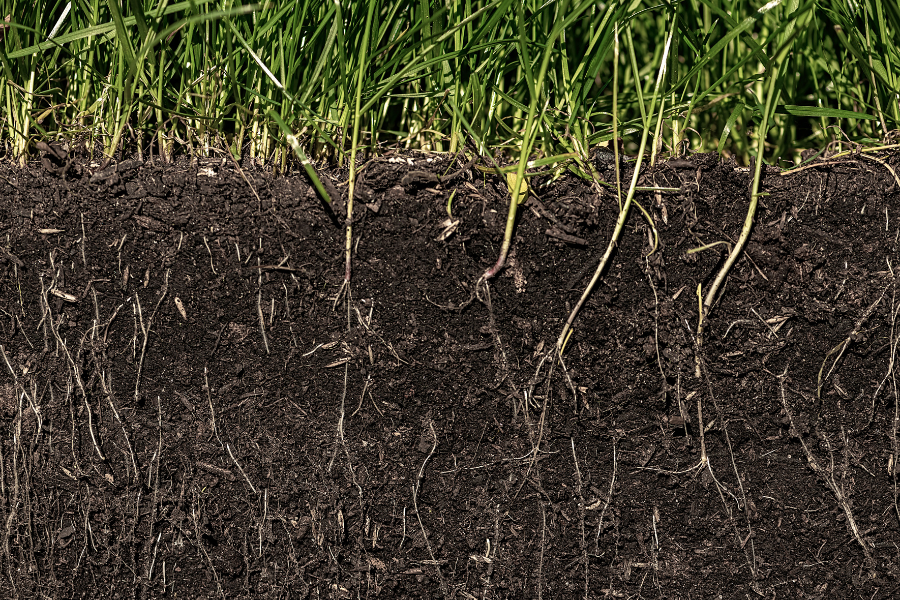
Soil health is the ability of soil to function as a productive, living system. Healthy soil holds water, supports root growth, cycles nutrients, and maintains structure. These functions rely on the interaction of physical, chemical, and biological properties, including soil structure, organic matter, and microbial activity.
The importance of soil health in dry conditions
In dry conditions, soil health becomes a key driver of production. Soils with higher organic matter can hold more water in the root zone, allowing crops and pastures to continue growing for longer between rainfall events. Well-structured soils also improve infiltration, ensuring rainfall soaks in rather than running off, which increases the water use efficiency.
Soil condition also determines how effectively plants can access stored moisture. In healthier soils, deeper and more extensive root systems allow crops and pastures to draw on water held below the surface. At the same time, active soil biology supports nutrient availability, which is often limited under dry conditions.
These combined effects lead to more stable and resilient production systems. While drought will still reduce yields, the impacts are often less severe, and recovery is typically faster when soil condition is strong. Maintaining soil structure and ground cover also helps reduce erosion risk, protecting the long-term productive capacity of the land.
Management practices to improve soil health
Improving soil health is a practical way to strengthen farm performance. Key management approaches include:
Maintaining ground cover to protect soil and reduce moisture loss
Minimising soil disturbance to preserve structure and soil carbon
Building organic matter through residue retention, adding organic matter using cover crops or mulching equipment
Manage pastures using rotational grazing methods to avoid overgrazing
Cover bare ground with straw or old hay to protect the soil and add organic matter
Sowing mixed species systems to support diverse biological soil life.
Managing grazing to avoid bare ground and support recovery
Links and resources
GBCMA - Land and Soil Health documents and resources
AgVic - Soil Conservation
AgVic - Productive Soils
This program/project of the Regional Drought Resilience Planning program received funding from the Australian Government’s Future Drought Fund and the Victorian Government.